
What Is a Cleanroom HVAC System, and Why Is It So Important?
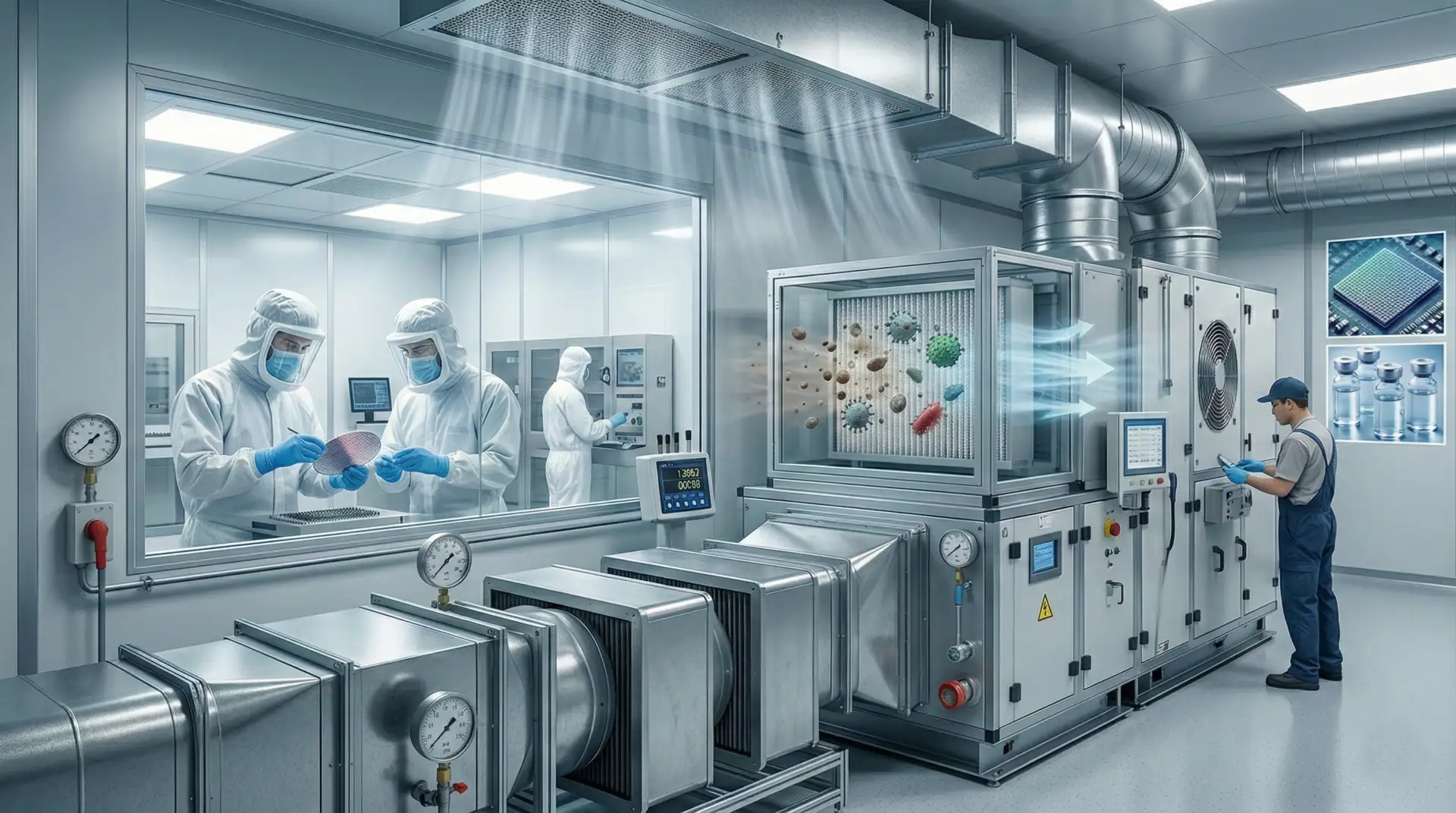
A cleanroom HVAC system is a precisely engineered environmental control solution designed to maintain extremely low levels of airborne contamination inside a sealed and controlled space. Unlike conventional commercial HVAC systems that prioritize occupant comfort, cleanroom HVAC systems are built primarily to control contamination. Their main objective is not just temperature and humidity regulation, but the strict management of airborne particles such as dust, microbes, and aerosols to meet defined cleanliness standards. .
What Is a Cleanroom HVAC System?
A cleanroom HVAC system is an advanced environmental management system engineered to maintain a specific air cleanliness level within a sealed space. These cleanliness levels are defined by international standards such as ISO 14644, which classify cleanrooms based on the number and size of airborne particles permitted per cubic meter of air.
In simple terms:
- Standard HVAC = Comfort-focused
- Cleanroom HVAC = Contamination-focused
The primary objective of a cleanroom HVAC system is to:
- Minimise airborne particulates
- Prevent microbial contamination
- Maintain pressure cascades
- Ensure stable environmental conditions
- Support regulatory compliance
It achieves this through a carefully integrated system of filtration, airflow control, pressurisation, and environmental regulation.
Key Components of a Cleanroom HVAC System
1. Advanced Filtration (HEPA & ULPA)
These filters are typically installed in ceiling grids to create laminar (unidirectional) airflow. The downward sweeping air movement pushes contaminants away from critical work zones and prevents particle accumulation, ensuring compliance with cleanroom standards.
2. Controlled Pressurization
Cleanrooms are usually maintained at a positive pressure relative to surrounding areas. This means the internal air pressure is higher than adjacent spaces, causing air to flow outward when doors are opened or minor leaks occur. This outward airflow prevents unfiltered, contaminated air from entering the clean environment.
3. High Air Changes Per Hour (ACH)
While a standard office may operate with 2–10 air changes per hour, cleanrooms require significantly higher rates. For example, an ISO Class 5 cleanroom may require between 250 and 700 air changes per hour.
This constant circulation of highly filtered air rapidly dilutes and removes contaminants generated within the space, maintaining strict cleanliness levels.
4. Precise Temperature and Humidity Regulation
Even small variations in temperature or humidity can disrupt sensitive manufacturing processes, cause electrostatic discharge, or encourage microbial growth.
Cleanroom HVAC systems maintain exceptionally stable environmental conditions, typically within ±1°F temperature tolerance and ±5% relative humidity, ensuring consistent operational performance.
5. Dedicated Outside Air Systems (DOAS)
Dedicated Outside Air Systems supply treated fresh air to the cleanroom while maintaining pressure balance. They help sustain proper pressurization, provide breathable air for occupants, and remove internally generated gaseous contaminants.
Why Cleanroom HVAC Is Important for Pharmaceuticals, Electronics, and Healthcare
A cleanroom HVAC system is not just supporting equipment — it is the core infrastructure that allows a cleanroom to function effectively. Without precise environmental control, even the most advanced facility cannot maintain contamination-free conditions. Its importance can be understood through four key pillars:
1. Product & Process Protection
In industries such as semiconductor manufacturing, a single microscopic particle settling on a silicon wafer can cause a critical defect, rendering a microchip unusable and leading to significant financial loss.
Similarly, in pharmaceutical compounding or biotechnology laboratories, airborne microbes can contaminate sterile injectables, vaccines, or cell cultures. This contamination can result in serious health risks for patients, costly product recalls, and regulatory penalties.
A Cleanroom HVAC systems acts as the primary line of defense by continuously filtering, diluting, and removing airborne contaminants before they can compromise sensitive processes.
2. Personnel Safety & Environmental Control
While protecting products is the primary goal, safeguarding personnel is equally important.
A properly designed HVAC system ensures:
- Continuous supply of fresh, breathable air
- Removal of carbon dioxide and airborne pollutants
- Stable temperature and humidity for safe working conditions
In pharmaceutical or biohazard environments where potent chemicals or hazardous materials are handled, the HVAC system creates negative pressure zones and manages exhaust air safely. This containment prevents dangerous substances from escaping and protects both operators and surrounding areas.
3. Regulatory Compliance & Industry Standards
Industries such as pharmaceuticals, medical devices, and aerospace operate under strict global regulations. Regulatory authorities like the U.S. Food and Drug Administration and the European Medicines Agency enforce stringent requirements for:
Enhancing Worker Productivity
A quieter workspace can lead to better focus and productivity among workers. By reducing noise pollution, Rockwool panels contribute to a more efficient and pleasant working environment
- Air cleanliness classifications
- Pressure differentials between rooms
- Environmental monitoring protocols
- System validation and documentation
A validated and properly functioning cleanroom HVAC system is mandatory for obtaining and maintaining manufacturing approvals. Without it, regulatory compliance is impossible.
4. Operational Consistency & Repeatability
Precision industries depend on repeatable outcomes. Controlled temperature, humidity, airflow, and pressure ensure that experiments and production processes perform consistently — regardless of seasonal or external environmental changes.
This stability guarantees:
- Reliable research results
- Uniform product quality
- Improved operational efficiency
- Reduced process variability
Consistency is the foundation of quality control and long-term business sustainability.
More Than Climate Control
A Cleanroom HVAC systems is far more than a temperature management solution. It is a sophisticated engineering system that actively creates and preserves a controlled environment essential for technological innovation, medical safety, and scientific advancement.
By maintaining contamination-free conditions, it supports the safe production of critical products and enables breakthroughs that modern society depends on every day.
Challenges in Cleanroom HVAC Systems
Despite their engineering excellence, these systems face challenges:
High Energy Consumption
Cleanroom HVAC systems can consume 60–70% of a facility’s total energy, due to:
- Continuous fan operation
- High filter resistance
- Intensive cooling and dehumidification
Operational Complexity
Maintaining stable pressure cascades while doors open and staff move is technically demanding.
Specialised Expertise Requirement
Design, validation, and maintenance require highly trained engineers and technicians.
Future Trends in Cleanroom HVAC
The future of cleanroom HVAC is moving toward:
- Smart Building Management Systems (BMS)
- AI-driven airflow optimisation
- Real-time environmental monitoring
- Dynamic pressure control
- Energy recovery systems
- Sustainable, low-energy cleanroom design
Instead of fixed settings, future systems will automatically adjust airflow, temperature, and pressure based on occupancy and process load—dramatically reducing energy consumption while maintaining compliance.
Frequently Asked Questions (FAQs)
A cleanroom HVAC system is designed to control airborne contamination, maintain pressure differentials, regulate temperature and humidity, and ensure compliance with ISO cleanroom standards. .
Air changes per hour (ACH) depend on classification. For example, an ISO Class 5 cleanroom may require 250–700 ACH, while lower classifications require fewer air changes.
HEPA filters remove 99.97% of particles 0.3 microns or larger, ensuring ultra-clean air and preventing contamination of sensitive processes.
Positive pressure means the air pressure inside the cleanroom is higher than surrounding areas, preventing contaminated air from entering when doors are opened.
Industries such as pharmaceuticals, biotechnology, semiconductor manufacturing, aerospace, healthcare, and medical device production require cleanroom HVAC systems.