
Best Cleanroom Disinfectants for Controlled Environments
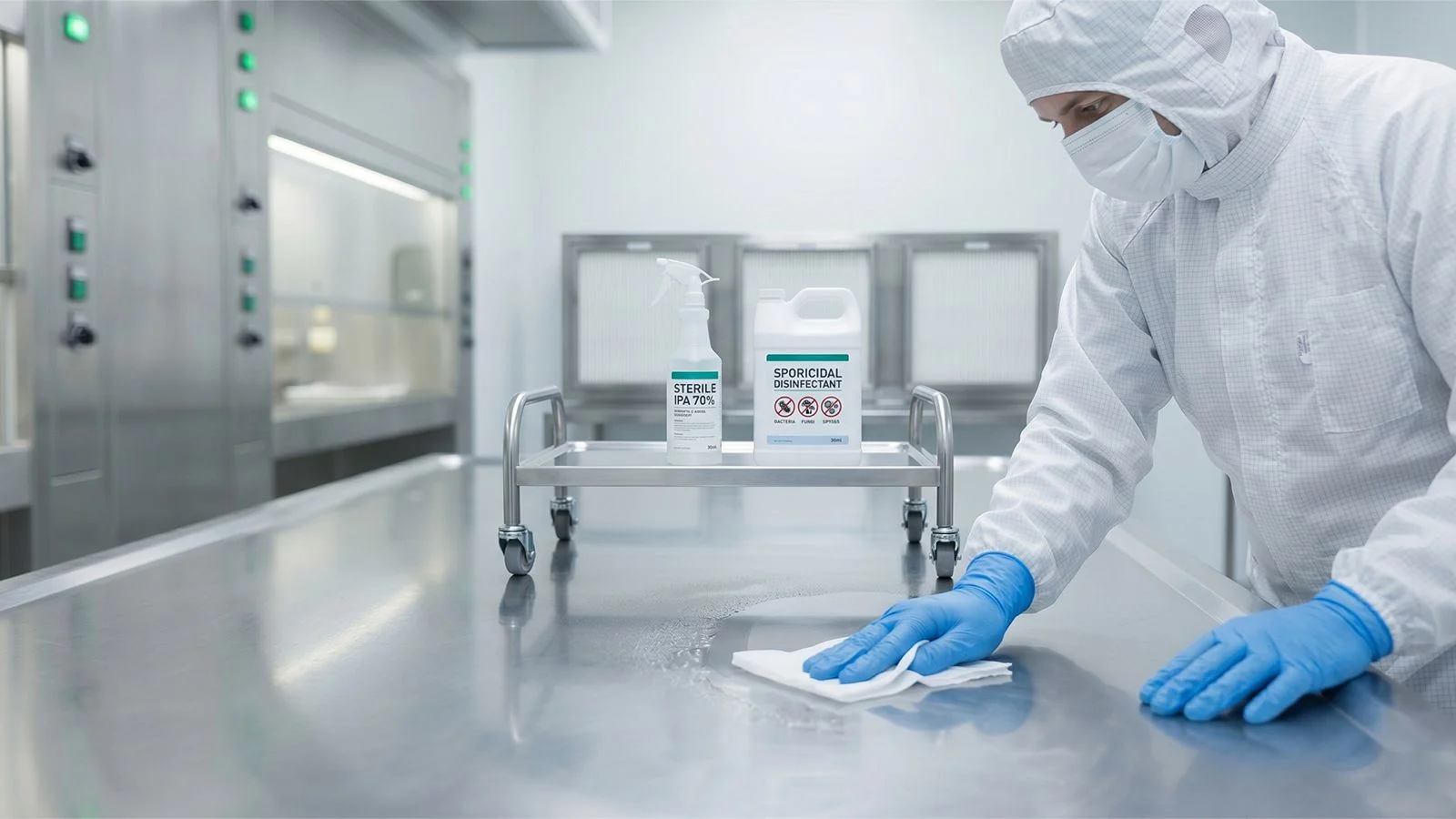
Cleanrooms are specially designed environments where contamination levels are strictly controlled to protect sensitive products, manufacturing processes, and human safety. Industries such as pharmaceuticals, biotechnology, healthcare, semiconductor manufacturing, food processing, medical device manufacturing, and research laboratories depend heavily on cleanrooms to maintain sterile and contamination-free conditions.
However, simply building a cleanroom is not enough to maintain cleanliness. Even with advanced HVAC systems, HEPA filters, and controlled airflow, microorganisms can still survive and spread through surfaces, equipment, operators, and materials entering the cleanroom. This is why cleanroom disinfection is one of the most important parts of contamination control.
A proper cleanroom disinfection program helps eliminate harmful microorganisms such as bacteria, fungi, viruses, and spores while ensuring compliance with international standards like ISO 14644, USP <797>, USP <800>, FDA regulations, and EU GMP guidelines.
In this detailed blog, we will understand everything about cleanroom disinfectants, including their importance, types, applications, cleaning procedures, rotation strategies, and best practices for maintaining controlled environments.
What are Cleanroom Disinfectants?
Cleanroom disinfectants are specialized chemical solutions used to kill or reduce microorganisms on surfaces inside controlled environments. Unlike ordinary household cleaning products, cleanroom disinfectants are designed specifically for highly sensitive environments where contamination control is critical.
These disinfectants help control:
- Bacteria
- Viruses
- Fungi
- Mold
- Spores
- Surface contamination
They are commonly used on:
- Floors
- Walls
- Ceilings
- Equipment
- Workstations
- Doors
- Pass boxes
- Biosafety cabinets
Cleanroom disinfectants are carefully formulated to:
- Leave minimal residue
- Work effectively in sterile areas
- Support cleanroom standards
- Prevent product contamination
Why Cleanroom Disinfection is Important
Disinfection is not just a cleaning activity. It is a critical process that directly affects product quality, patient safety, operational reliability, and regulatory compliance.
1. Prevents Microbial Contamination
Microorganisms can enter cleanrooms through personnel movement, airflow, raw materials, equipment transfer, and packaging materials. Once inside, microorganisms can settle on surfaces and multiply quickly if not controlled properly.
In pharmaceutical manufacturing, microbial contamination can damage sterile medicines and create serious health risks for patients. In biotechnology laboratories, contamination may affect research accuracy and product development. Proper disinfection helps eliminate harmful microorganisms before they become a major problem.
2. Protects Product Quality
Many industries manufacture highly sensitive products that require sterile conditions. Examples include injectable medicines, vaccines, medical implants, semiconductor chips, and electronic components. Even microscopic contamination can affect product performance and quality. Cleanroom disinfectants help maintain controlled conditions and reduce the risk of product rejection or batch failure.
3. Supports Regulatory Compliance
Regulatory authorities require cleanroom facilities to maintain strict contamination control programs. Standards such as ISO 14644, USP <797>, USP <800>, FDA Guidelines, and EU GMP all emphasize the importance of validated cleaning and disinfection procedures.
Companies must maintain records for cleaning schedules, disinfectant rotation, environmental monitoring, and validation reports. Poor disinfection practices can result in audit failures, compliance issues, product recalls, and manufacturing shutdowns.
4. Improves Safety for Operators
Some cleanrooms handle hazardous chemicals, biological agents, and toxic pharmaceutical powders. Improper contamination control can expose operators to harmful substances. A proper disinfection program helps maintain a safer working environment for employees and reduces contamination spread throughout the facility.
Types of Contaminants Found in Cleanrooms
Understanding contamination types helps in selecting the correct disinfectant.
Bacteria
Bacteria are among the most common cleanroom contaminants. They can survive on surfaces such as floors, gloves, tools, and equipment. Some bacteria multiply rapidly in warm and humid environments.
Fungi and Mold
Fungi and mold grow in moist conditions and spread through airborne spores. These contaminants can affect air quality and damage sensitive products.
Viruses
Viruses can spread through contaminated surfaces and human contact. Laboratories and healthcare cleanrooms often require strong antiviral disinfection protocols.
Bacterial Spores
Spores are extremely resistant microorganisms that survive harsh environmental conditions. Regular disinfectants may not destroy spores completely, which is why sporicidal agents are necessary.
Characteristics of an Effective Cleanroom Disinfectant
An effective cleanroom disinfectant should:
- Kill a broad range of microorganisms
- Act quickly
- Leave low residue
- Be compatible with cleanroom surfaces
- Be safe for operators
- Meet regulatory requirements
No single disinfectant can eliminate all types of microorganisms effectively. Because of this, most facilities use multiple disinfectants in a rotation program.
Common Cleanroom Disinfectants
1. 70% Isopropyl Alcohol (IPA)
70% IPA is one of the most widely used cleanroom disinfectants. It is effective against bacteria, viruses, and some fungi.
Advantages: Fast evaporation, minimal residue, quick disinfection, and easy application.
Limitations: Not sporicidal and highly flammable.
Applications: Daily cleaning, surface wiping, equipment sanitization, and glove disinfection. IPA is commonly used in pharmaceutical cleanrooms and ISO 5 environments.
2. Hydrogen Peroxide (H2O2)
Hydrogen peroxide is a broad-spectrum disinfectant commonly used in cleanrooms. It works against bacteria, viruses, and fungi.
Advantages: Low residue, strong oxidizing action, and good compatibility.
Limitations: Limited sporicidal performance and can become corrosive at higher concentrations.
Applications: Weekly disinfection, equipment cleaning, and surface sanitation.
3. Peracetic Acid (PAA)
Peracetic acid is a powerful sporicidal disinfectant. It is highly effective against spores, viruses, bacteria, and fungi.
Advantages: Excellent microbial kill performance, low residue, and fast action.
Limitations: Strong fumes and requires careful handling.
Applications: Monthly sporicidal cleaning, critical sterile environments, and pharmaceutical production areas.
4. Sodium Hypochlorite (Bleach)
Bleach is widely used for deep contamination control. It is effective against bacteria, viruses, and spores.
Advantages: Affordable and strong disinfecting capability.
Limitations: Leaves residue, corrosive, and has a strong odor.
Applications: High-risk contamination control, emergency decontamination, and sporicidal treatment.
5. Quaternary Ammonium Compounds (Quats)
Quats are commonly used for routine cleaning. They work well against bacteria and some viruses.
Advantages: Mild on surfaces, easy to use, and has a pleasant odor.
Limitations: Not effective against spores and may leave residue.
Applications: Floors, walls, and general cleaning areas.
Importance of Disinfectant Rotation
Using only one disinfectant continuously may reduce long-term effectiveness. Cleanroom facilities use disinfectant rotation programs to improve contamination control, reduce microbial resistance, and meet regulatory requirements.
Recommended Disinfectant Rotation Schedule
← Swipe table horizontally to view all columns →
| Frequency | Recommended Disinfectant | Target Microorganisms |
|---|---|---|
| Daily | Sterile 70% IPA | Bacteria, Viruses, Fungi (surfaces and gloves) |
| Weekly | Hydrogen Peroxide or Quats | Broad-spectrum bacteria and routine contamination |
| Monthly | Sporicidal agent such as PAA or Bleach | Resistant bacterial spores and deep sanitization |
Proper Cleanroom Disinfection Procedure
A successful disinfection process requires proper technique.
Step 1 - Surface Cleaning
Visible dirt and residue must be removed before applying disinfectants because organic matter can reduce disinfectant effectiveness.
Step 2 - Correct Application
Disinfectants should be applied using sterile wipes, mops, spray bottles, or automated systems. Application should follow cleanroom cleaning protocols.
Step 3 - Contact Time
Every disinfectant requires a specific wet contact time to effectively kill microorganisms. Surfaces should remain wet for the recommended duration.
Step 4 - Validation and Documentation
Facilities should maintain records for cleaning schedules, disinfectant usage, rotation plans, and validation activities. Proper documentation supports regulatory compliance.
Common Mistakes in Cleanroom Disinfection
Many contamination problems occur due to improper cleaning practices. Common mistakes include using incorrect disinfectants, ignoring contact time, poor staff training, inconsistent cleaning schedules, improper dilution, and a lack of disinfectant rotation. These mistakes can reduce contamination control effectiveness.
Future Trends in Cleanroom Disinfection
Modern cleanroom facilities are adopting advanced technologies to improve contamination control.
Automated Disinfection Systems
Robotic systems now perform UV disinfection, hydrogen peroxide vapor sterilization, and automated spraying. These technologies improve consistency and reduce human error.
Smart Monitoring Systems
IoT-based systems continuously monitor particle counts, surface cleanliness, and environmental conditions. Real-time monitoring improves contamination management.
Eco-friendly Disinfectants
Industries are moving toward low-toxicity chemicals, sustainable cleaning products, and environmentally friendly formulations. This helps reduce environmental impact while maintaining high disinfection performance.
Read More: What is a Cleanroom and the Role of a Cleanroom in the Pharmaceutical Industry
Frequently Asked Questions (FAQs)
70% Isopropyl Alcohol (IPA) is commonly used for daily surface disinfection and glove wiping because of its quick evaporation and minimal residue. However, for a complete program, sporicidal agents (like peracetic acid or bleach) and broad-spectrum disinfectants are also rotated.
Using only one disinfectant continuously can allow resistant microbial strains or spores to survive and build up. Rotating between standard disinfectants (like IPA or Quats) and sporicidal agents ensures broader, more effective contamination control and satisfies regulatory compliance.
No. Regular disinfectants like Isopropyl Alcohol (IPA) or Quaternary Ammonium Compounds do not destroy bacterial spores. Only specialized sporicidal disinfectants, such as peracetic acid (PAA) and sodium hypochlorite (bleach), can effectively penetrate and kill highly resistant spores.
Most cleanrooms follow a structured program comprising daily routine wipes (typically using sterile 70% IPA), weekly deep surface disinfection (using hydrogen peroxide or Quats), and monthly sporicidal treatment (using peracetic acid or bleach), aligned with operational risk profiles.
Cleanroom cleaning and disinfection procedures are governed by several key international standards, including ISO 14644, USP <797>, USP <800>, EU GMP guidelines, and FDA aseptic processing regulations.